

Menu
Strengthening the capacity of AIDS Service Organizations(ASOs) and HIV-funded programs in Ontario by providing free resources and funded organizational development services
ABOUT US
We provide services to
community-based HIV/AIDS organizations and their boards
OODP offers a suite of
services to ASOs and HIV-funded programs (our clients) throughout Ontario. Services include coaching, various levels of planning and workshops on various organizational development topics. We also offer customized consulting support that meets
ASOs where they are at with what they need.
In addition, we develop and disseminate free resources on many capacity
building topics that can be used with or without our help. Our roster of consultants offers decades of experience in organizational development, and a deep understanding of the work of ASOs. They bring rich and diverse lived experience and identities, and include people living with HIV/AIDS.
Throughout our history, we have been dedicated to meeting the needs of the HIV sector in innovative and meaningful ways. We are proud to contribute
to creating healthy communities where few get HIV and no-one dies from AIDS.
Our consulting services are available only to ASOs and programs that receive funding from the AIDS Bureau, Ontario Ministry of Health.
We provide instant access to free resources
NEWEST RESOURCES
-
Auditing Resources Using an Anti-Racism Lens
by
Anti-Racist Organizational Change -
Co-leadership: Alternatives to a Single ED Model
by
Organizational Planning & Support -
Leadership Succession Planning Resource
by
Organizational Planning & Support -
Emergency Continuity Planning Assessment Tool
by
Organizational Planning & Support
About Us
EST. 1995
The Ontario Organizational Development Program (OODP) was established in 1995. It was a response to AIDS Service Organizations (ASOs) calling on the provincial government to offer them long-term organizational development resources to ensure they could meet their missions and serve communities effectively.
The work of OODP begins with and is overseen by the Program Administrator. Consults are provided by organizational development experts with experience in the HIV sector. They bring rich and diverse lived experience and identities, and include people living with HIV/AIDS.
At the heart of OODP’s work is our commitment to offer organizational development support to ASOs and HIV-funded programs as they strive to meet their missions. Our approach is grounded in racial equity and social justice. We are also committed to Reconciliation with Indigenous communities. We offer support to ASOs and HIV-funded programs to operate effectively, meet community needs and actively eradicate the profound service and structural barriers that must be broken down if we want to see a meaningful decline in HIV and AIDS in Ontario.
OUR STRATEGIC PLAN
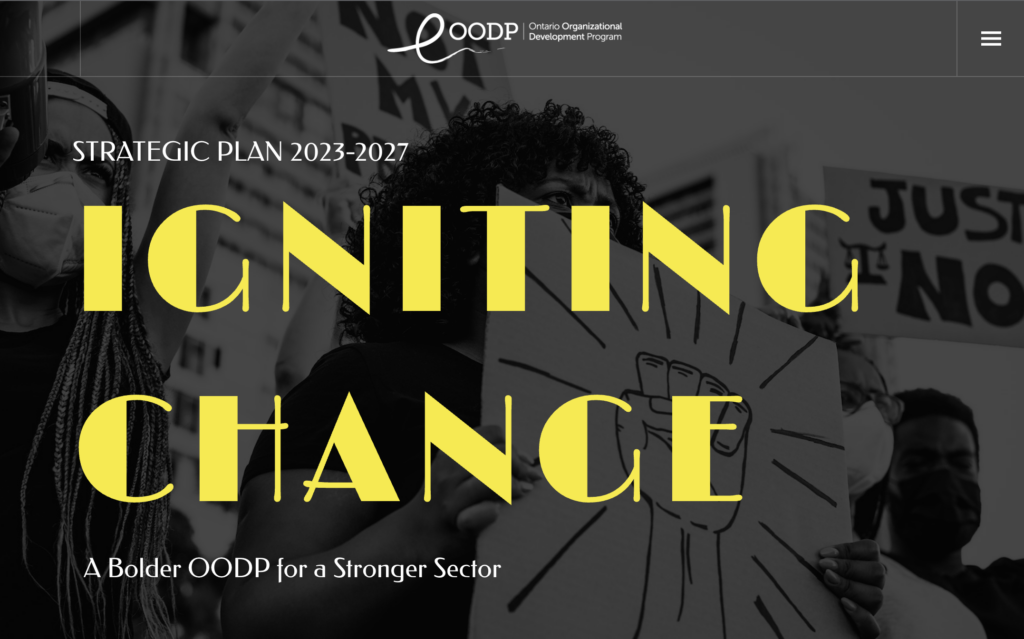
VISION
Socially just systems.
A powerful HIV sector.
Healthy communities.
MISSION
Through a social justice lens, we provide organizational development services and resources to strengthen the capacity of the HIV sector in Ontario to build healthier, equitable communities.
VALUES
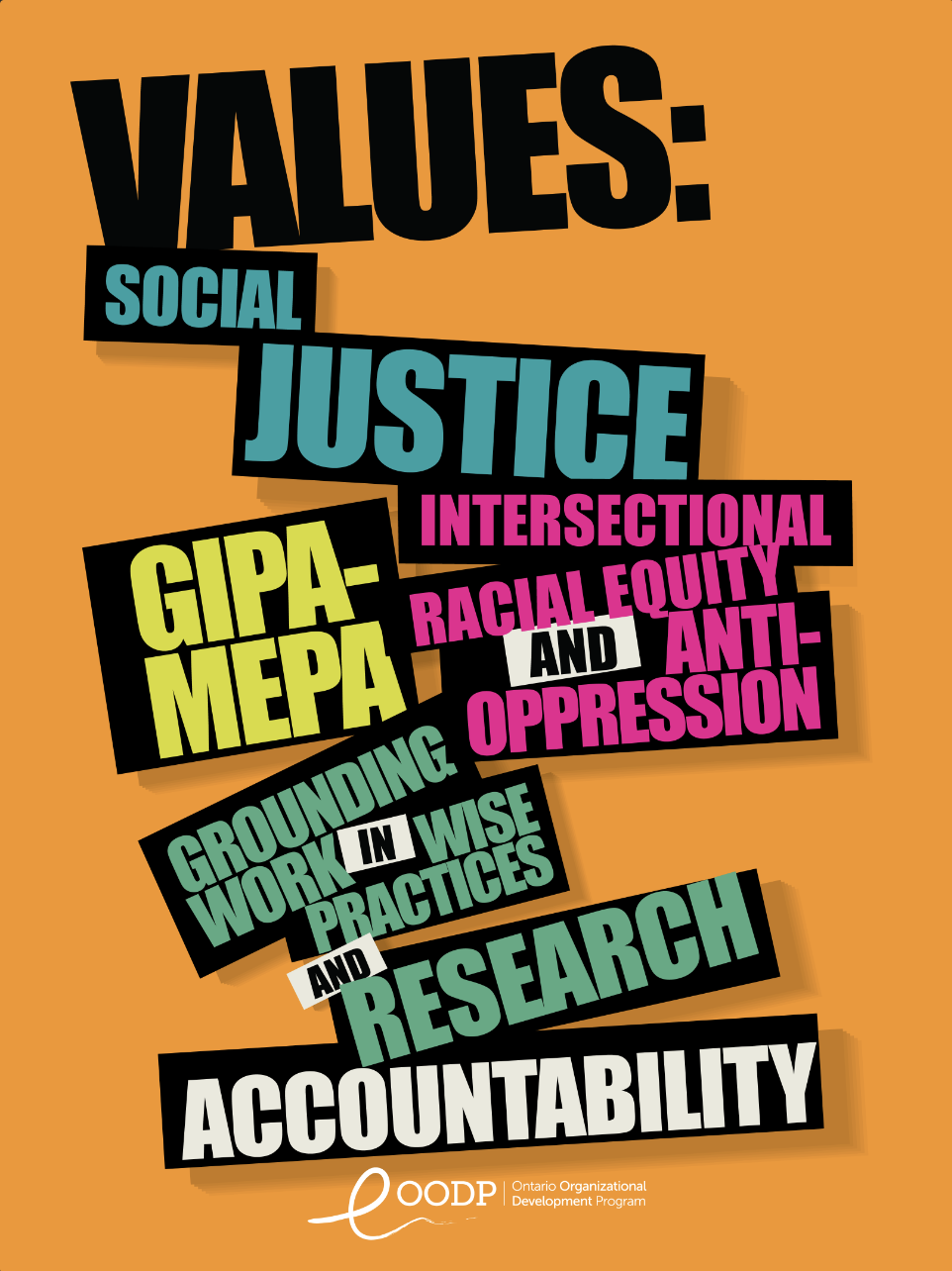
Other organizational development and
capacity building resources

Our thanks to our funder, the AIDS Bureau, Ontario Ministry of Health and Long-Term Care
© 2023 The Ontario Organizational Development Program (OODP)